Artisan Gin: The Definitive Guide to Small-Batch Craftsmanship in 2026
If a spirit is pumped out of a 50,000-litre industrial vat, it isn't artisan gin, regardless of how many hand-drawn botanicals decorate the label. You've probably stood in the spirit aisle recently, feeling a bit lost amongst the endless rows of colourful bottles and wondering if "small-batch" has lost its meaning. It's a common frustration for anyone who values quality over mass production. We agree that the term should mean something more than just a clever marketing campaign.
This guide promises to reveal the true heart of the craft, from the heat of the copper still to the curiosity-led botanical blends that define the best of British distilling. You'll discover the technical secrets behind small-batch production and learn how to spot a genuine maker. Whether you are looking for a unique gift or a treat for your own cabinet, we'll help you find a spirit with soul. At Wicstun Distillery, we believe every drop should tell a story. Explore our range of artisan gins to see how we balance heritage with a modern, adventurous spirit.
Key Takeaways
- Understand why true artisan gin is defined by the hands-on involvement of a master distiller and the precision of small-batch production.
- Learn the secrets of the copper pot still and why only the "heart" of the distillation is selected to ensure a pure, flavourful spirit.
- Discover how to spot a genuine craft bottle by examining labels for specific distillery names and ensuring the ABV is high enough to carry essential botanical oils.
- Gain expert tips on curating a versatile home collection that balances classic London Dries with experimental, aromatic blends.
- Master the art of the perfect serve by pairing your favourite handcrafted Yorkshire spirit with garnishes that celebrate its unique botanical heritage.
What is Artisan Gin? Defining the Small-Batch Spirit
Artisan gin isn't just a liquid in a bottle; it's a testament to the maker's soul and a rejection of the assembly line. In 2026, the spirit is defined by the constant, hands-on involvement of a master distiller throughout every stage of the production cycle. While industrial spirits rely on automated sensors and massive vats, these gins are crafted in limited quantities to ensure absolute flavour precision. Artisan gin is the intersection of traditional heritage and modern flavour exploration.
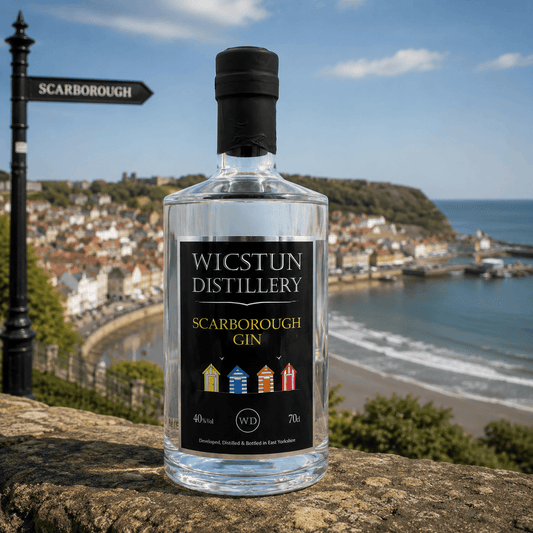
The 2026 market shows a decisive shift, with 68% of UK spirits drinkers now prioritising transparency and provenance over global conglomerate branding. This movement values independent family ownership and the manual bottling process over high-speed factory outputs. Understanding Gin's history and production helps us appreciate how far we've come from the industrial "Gin Craze" to today's refined, botanical-forward spirits. At Wicstun Distillery, our artisan gin range is built on this foundation of honesty and local pride.
The Rise of Craft Gin in the UK
The UK has evolved from consuming industrial spirits to leading the premium Gintonica movement. Consumers are increasingly choosing independent makers for their home bars, seeking out spirits that offer a genuine connection to a place. The personality of the maker adds a layer of value that mass production cannot replicate. From aromatic gins to our rich caribbean dark spiced rum, every bottle we produce is "Crafted through Curiosity," ensuring that Yorkshire heritage remains at the heart of every sip.
Small-Batch vs Artisan: Is There a Difference?
It is easy to confuse these terms, but the distinction is vital for any enthusiast. Small-batch refers strictly to the volume of the run, yet some large brands use this as a clever marketing tactic for batches that still reach thousands of litres. In contrast, artisan refers to the skill of the maker. Genuine artisanal distilling requires constant human sensory checks during the run. The distiller uses their own palate and nose to decide exactly when to make the "cut," a process that ensures only the purest heart of the spirit is captured. This manual oversight ensures a level of quality and character that a computerised system simply cannot match.
The Alchemy of the Copper Still: How Artisan Gin is Crafted
The heart of any artisan distillery is the copper pot still. It's a choice made for quality over quantity. Copper reacts with the spirit on a molecular level, stripping away impurities and sulphur that would otherwise mask the delicate flavours. This isn't the rapid, automated world of industrial spirits. It's a slow, unhurried pace where the distiller's intuition leads the way, ensuring that every batch retains its Yorkshire heritage.
Crafting artisan gin involves a meticulous process known as "the cut." During the distillation run, the liquid transitions through three distinct stages. The Heads come first, containing harsh, unwanted alcohols. The Tails appear last, often heavy with oily residues that can cloud the spirit. Only the Heart, the cleanest and most vibrant portion, makes it into a premium bottle. This selective approach ensures a smooth finish that mass-produced alternatives often lack, focusing on purity rather than volume.
Whilst the legal definition of gin provides the basic framework for production, the artisan's soul is found in their extraction method. Some makers prefer maceration, steeping botanicals directly in the spirit for up to 24 hours. Others use vapour infusion, hanging a basket of ingredients above the boiling liquid to capture lighter, more volatile oils. Independent makers often organise their range to showcase these different techniques, offering everything from robust London Drys to delicate, floral expressions.
Botanical Selection: The Distiller's Palette
Every recipe begins with the "holy trinity" of juniper, coriander seed, and angelica root. These ingredients provide the essential structural base for the spirit. From here, artisan makers lean into their "Crafted through Curiosity" ethos. They might forage local flora from the East Yorkshire countryside or source exotic spices to build a unique sensory profile. It's a process of trial and error, often taking dozens of micro-batches to find the perfect balance between citrus, spice, and earth.
Hand-Bottled Integrity
Quality doesn't end when the spirit leaves the still. Manual bottling and labelling represent the final seal of artisanal excellence. It's about more than just aesthetics; it's a promise of small-batch consistency. Each run might only produce 150 to 200 bottles, allowing for a level of scrutiny that industrial plants simply can't match. This "distilled and bottled by hand" commitment ensures that every drop meets the maker's standard. Wicstun Distillery brings this same level of care to everything they produce, from aromatic gins to their Caribbean dark spiced rum.
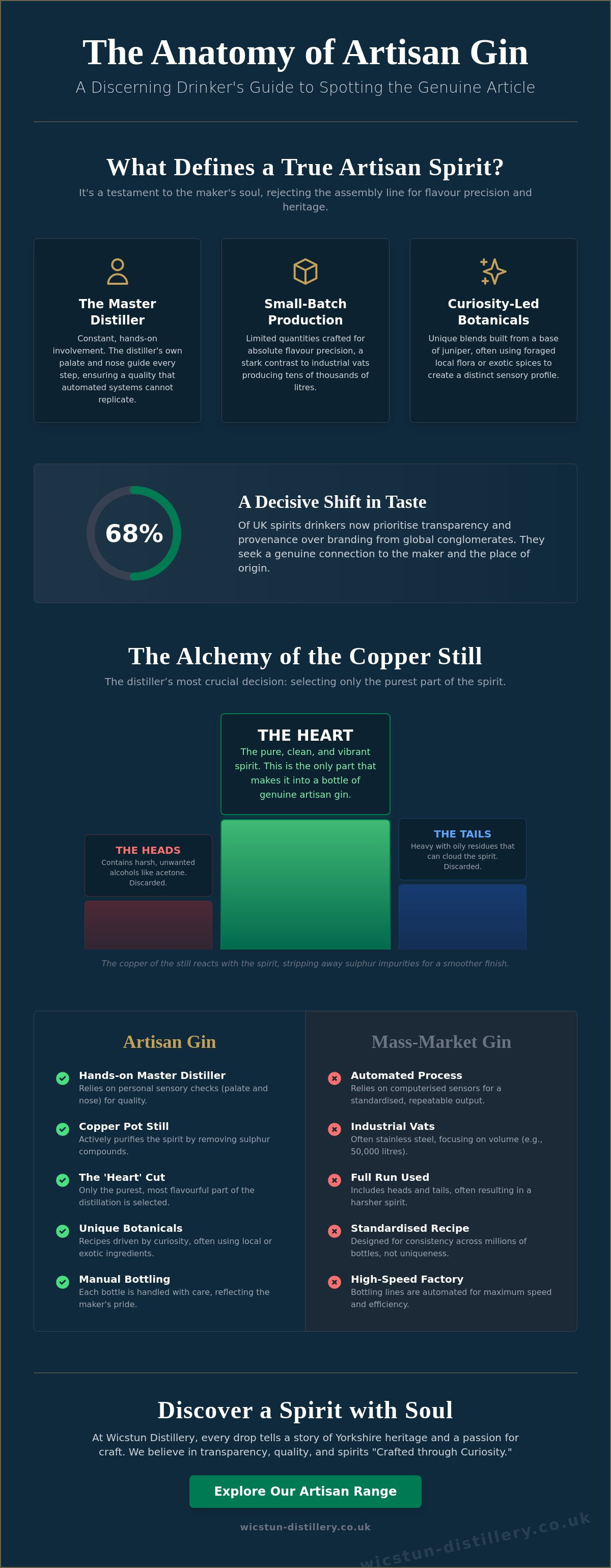
Artisan vs Mass-Market: How to Spot the Genuine Article
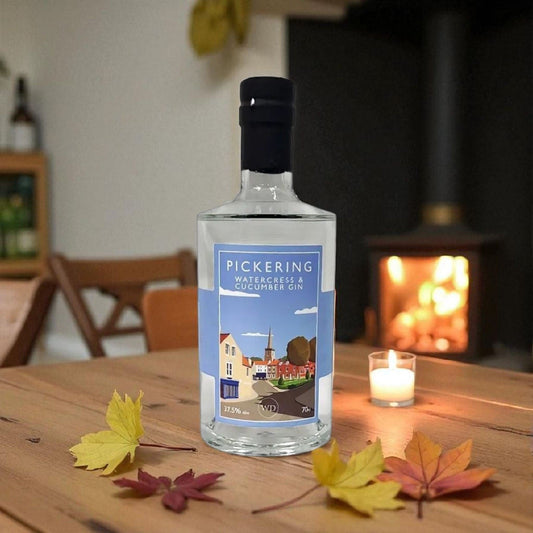
Identifying a bottle of genuine artisan gin amongst the sea of supermarket options requires a keen eye for detail. Look past the glossy marketing and examine the back label first. Authentic makers proudly display their specific distillery name and location, whereas mass-market brands often hide behind a generic holding company address. You should also check the ABV; premium spirits typically sit at 40% or higher. This strength is vital because it allows the spirit to carry complex botanical oils effectively without the flavours falling flat. When a gin drops to the legal minimum of 37.5%, it's often a sign of cost-cutting rather than a focus on quality.
Price serves as another honest indicator of what's inside the bottle. When you consider the cost of high-quality botanicals and the manual labour involved in small-batch production, a price point between £35 and £45 is standard for a 70cl bottle. True artisan gin never prioritises volume over flavour profile. You'll notice the difference immediately in the mouthfeel; craft spirits feel creamy and weighted on the palate, while industrial ethanol often leaves a sharp, metallic burn at the back of the throat.
Identifying Craft-Washed Spirits
Large-scale producers frequently use "craft-washing" to entice drinkers. They adopt rustic-style packaging, using textured paper and handwritten fonts to suggest a "handmade" origin that doesn't actually exist. The contract distilling debate is equally complex; whilst some brands don't own their own still, a genuine artisan is always transparent about the production location. In 2024, transparency became the hallmark of quality. You can explore our range of transparently produced spirits in our artisan gin collection.
The Sensory Test: Tasting the Difference
A well-crafted spirit reveals its character in stages rather than hitting you with a single note of artificial flavour. To truly assess quality, try your gin neat or with a tiny splash of water at room temperature. This technique highlights the trend of locally-sourced botanicals, allowing you to taste the sequence of flavours from initial citrus brightness to a lingering, resinous juniper finish. Always use a jigger to ensure you maintain the perfect ratio when mixing, as even the best spirits can be drowned by too much tonic.
If you have questions about our traditional distilling methods or want to learn more about our Yorkshire roots, feel free to contact our distillery team.
Curating Your Home Collection: Botanicals and Perfect Serves
Building a versatile gin shelf is a rewarding journey for any enthusiast. To start your collection of artisan gin, focus on contrast. Every well-stocked bar requires a dependable London Dry for its crisp, juniper-led punch. This serves as your foundation for timeless cocktails. Complement this with at least one experimental aromatic gin. These bottles represent the distiller's creative signature; they often feature unique botanicals that tell a story of a specific landscape or a bold, new flavour profile. Having these two distinct styles ensures you can cater to traditionalists and adventurous drinkers alike during any gathering.
The mixer is just as vital as the spirit itself. Using high-quality, chilled tonic water is the only way to respect the distiller's hard work. A poor-quality tonic will drown out the subtle nuances you've paid for, while a warm one will kill the carbonation instantly. Always view the perfect serve as a thoughtful method to enhance the spirit's botanical profile rather than a way to mask the liquid's true character. When you treat the garnish and tonic with the same respect as the gin, the results are transformative.
Pairing by Profile: Aromatic, Dry, or Fruity
Matching your gin to the right accompaniment changes the entire tasting experience. For aromatic gins, reach for a Mediterranean tonic and a sprig of fresh rosemary or a slice of pink grapefruit to highlight the herbal notes. Classic Dry gins remain the gold standard for a traditional G&T, best served with a sharp wedge of lime or a zesty lemon twist. When you're enjoying fruity or flavoured gins, elderflower tonic or a simple splash of soda water often works best. These lighter mixers allow the natural sweetness of the fruit to shine through without becoming cloying or overly sugary.
The Wicstun Way: Crafted through Curiosity
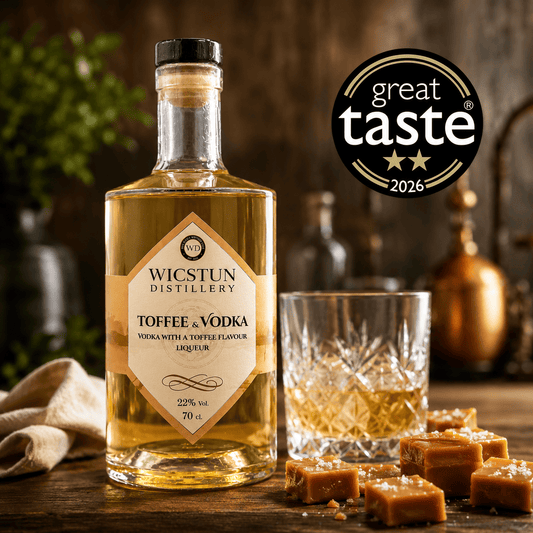
At our family distillery in the heart of East Yorkshire, we believe that great spirits begin with a restless mind. Our philosophy of being Crafted through Curiosity means we combine time-honoured heritage techniques with a desire to explore new horizons. Every bottle in our artisan gin collection is developed, distilled, and bottled in-house to ensure total quality control. This same adventurous approach often leads a maker to excel in other areas. The same precision used for our award-winning gins creates our handmade toffee vodka, proving that curiosity knows no bounds. We invite you to step away from the predictable supermarket aisles and explore the depth of small-batch spirits made with genuine passion and local pride.
Embrace the Future of Small-Batch Excellence
As we look toward the distilling landscape of 2026, it's clear that the appetite for genuine quality has never been stronger. Choosing these bottles means moving beyond the generic shelves of the supermarket and embracing spirits with a real sense of place. You've seen how traditional copper stills and a focus on small-batch production create a depth of flavour that mass-market brands simply can't replicate. The shift towards transparency and manual craftsmanship ensures that what's in your glass is as authentic as the heritage behind it.
At Wicstun Distillery, we're an independent family-run business based in the heart of East Yorkshire. We've spent years honing our craft, ensuring every bottle is hand-distilled to capture our unique flavour profiles. Our process is rooted in heritage but driven by a constant curiosity for new botanical blends. Whether you're a seasoned collector or just starting your home bar, the difference is in the detail. You can explore our range of handcrafted artisan gins to find your next favourite pour. If you're looking for something truly distinct, our Strawberry and Lime Gin perfectly showcases our commitment to bold, natural ingredients. It's time to pour a glass that tells a story of craftsmanship and local pride.
Frequently Asked Questions
What is the main difference between artisan gin and standard gin?
Artisan gin is defined by its manual production process and a focus on unique botanical profiles rather than mass-market consistency. Standard gins are often produced in industrial column stills that can yield 100,000 litres of spirit in a single day. In contrast, an artisan gin is usually made in traditional copper pot stills where the master distiller makes "cuts" by hand to ensure only the purest spirit remains. This hands-on approach prioritises character over sheer volume.
Why is artisan gin more expensive than supermarket brands?
The higher price reflects the cost of premium ingredients and the labour-intensive nature of small-scale production. Large brands benefit from massive economies of scale, whilst independent makers often pay up to 40% more for ethically sourced botanicals and bespoke glass packaging. Every bottle of Wicstun Gin is filled and labelled by hand in East Yorkshire. You're paying for the craftsmanship of a family-run business rather than a global marketing budget.
Is small-batch the same thing as artisan?
Whilst these terms are often used together, "small-batch" refers to the volume produced in a single run, whereas "artisan" refers to the skill of the maker. A batch is typically considered "small" if it's under 1,000 litres, though many UK craft distilleries produce fewer than 200 bottles at a time. An artisan gin signifies that a human, not a computer, is making every sensory decision. It's the perfect marriage of Yorkshire heritage and craft distilling.
How should I store my artisan gin to preserve the botanical flavours?
Store your gin in a cool, dark place away from direct sunlight to keep the delicate botanical oils from degrading. UV rays can alter the chemical structure of the spirit in as little as 14 days, leading to a flat or soapy taste. Ensure the cap is tightly sealed to prevent evaporation. Unlike wine, bottles should be stored upright to protect the seal from the high alcohol content, ensuring every pour remains aromatic and fresh.
Can I visit an artisan distillery to see how the gin is made?
Yes, most independent distilleries welcome visitors for tours and tastings to show off their handmade spirits. Visiting a local site allows you to see the copper stills and smell the raw botanicals first-hand. At Wicstun Distillery, we believe in transparency and community, offering a warm Yorkshire welcome to anyone curious about our process. It's a great way to understand the journey from the still to your glass through a guided experience.
Does artisan gin expire or go off over time?
Gin has an indefinite shelf life if left unopened, but the flavour profile will begin to fade once the bottle is opened. Most experts recommend finishing a bottle within 12 to 24 months of opening to enjoy the botanicals at their peak. After this period, oxygen in the bottle causes the delicate citrus and floral notes to oxidise. It won't become unsafe to drink, but it will lose the vibrant "zing" that defines a premium spirit.