Table of Contents
- The Artisanal Gin Distillation Process Explained
- Small Batch vs Mass Produced Spirits: The Real Difference
- How to Identify Quality Small Batch Gin
- Frequently Asked Questions
Last Updated: September 30, 2026
The Artisanal Gin Distillation Process Explained
The artisanal gin distillation process is a hands-on method where a distiller carefully controls every stage, from botanical selection to the final cut, rather than relying on automated, high-volume systems, and it is how small batch spirits are made. Small batch spirits are made this way: in smaller runs, with closer attention to balance and character. At Wicstun Distillery, a family-run independent distillery in Market Weighton, every bottle is hand-distilled and bottled, inspired by the Yorkshire Wolds.
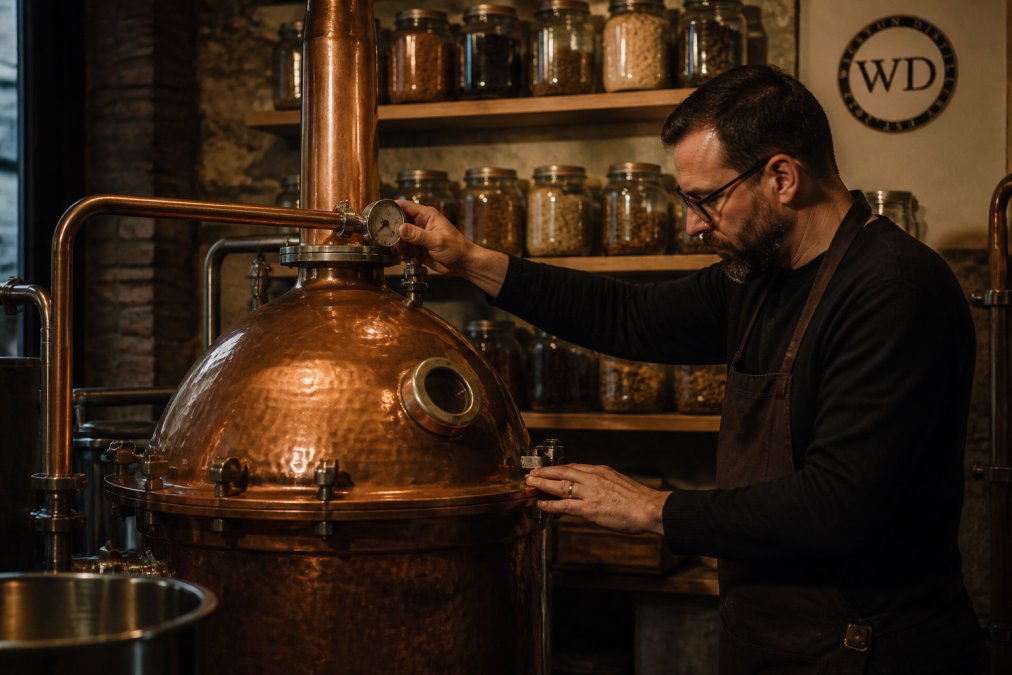
A distiller carefully monitoring a small copper pot still in a warm, dimly lit craft distillery, with botanical jars visible on wooden shelves behind
The process starts with choosing botanicals, then steeping or vapour-infusing them before distillation. The distiller watches the spirit as it comes off the still, separating the heads, heart and tails by smell and taste. The heart, the cleanest and most balanced portion, is what goes into the bottle. This hands-on judgement is what separates craft production from a fully automated line.
Small Batch vs Mass Produced Spirits: The Real Difference
Small batch versus mass produced spirits comes down to scale and control. Mass production prioritises volume and consistency across huge runs, often using continuous column stills and standardised recipes. Small batch production runs in smaller quantities, so the distiller can adjust and taste as they go.
The practical difference shows up in flavour. A smaller run gives the distiller room to fine-tune balance, so the finished spirit often has more depth and a clearer sense of character. It is not about one being "stronger"; it is about how much attention each bottle receives.
Aspect |
Small Batch |
Mass Produced |
|---|---|---|
Run size |
Smaller, limited runs |
Large, continuous runs |
Distiller control |
Hands-on, tasted throughout |
Automated, standardised |
Flavour focus |
Balance and character |
Uniform consistency |
Typical still |
Pot still |
Column still |
How to Identify Quality Small Batch Gin
How to identify quality small batch gin starts with the label and the maker. Look for a named distillery, a clear production location, and details about how the spirit was made. A maker proud of their process tends to say so.
Next, check the spirit itself. A quality small batch gin has a clean, balanced nose and a smooth finish, without a harsh alcohol burn. Vegan-friendly labelling matters too, so look for a clear statement that no animal products were used in production.
Yorkshire Distillery Tour with Gin & →
If you want to taste the difference for yourself, a Yorkshire Distillery Tour with Gin & Rum Tasting lets you meet the distiller and try the range firsthand. You can also explore the Aromatic Dry Gin, a cardamom and orange dry gin with a warm citrus finish, or the Caribbean Dark Rum with notes of caramel, vanilla and oak.


Frequently Asked Questions
Does small batch always mean higher quality?
Not automatically. Small batch production gives a distiller more control over every stage, from botanical selection to the final cut, which makes consistent quality easier to achieve. But the real difference comes down to the distiller's skill and standards. A small batch spirit made with cheap ingredients and rushed cuts will still disappoint. Look for award recognition, clear provenance, and a distillery willing to explain its process. Wicstun Distillery's Aromatic Dry Gin, for example, is award-recognised and hand-distilled in Market Weighton.
How does the distillation process differ for small batch spirits?
Small batch distillation typically uses smaller copper pot stills, which gives the distiller tighter control over temperature and the timing of the heads, hearts, and tails cuts. Mass-produced spirits often run through large column stills for speed and volume. The slower approach in small batch production means more of the desirable compounds stay in the spirit and fewer harsh notes make it through. This is why small batch spirits often taste smoother and more layered.
Are small batch spirits more expensive to produce?
Yes, generally. Smaller runs mean less liquid per distillation, more hands-on time from the distiller, and higher cost per bottle for ingredients and energy. You're paying for the craft, the time, and the quality of the botanicals or base spirit, not just the label. Wicstun Distillery's Caribbean Dark Rum and Yorkshire Dry Gin are both £38.
Choosing well comes down to knowing what to look for: a named maker, a clear process, and a spirit that tastes balanced rather than harsh. Wicstun Distillery makes that easy with award-winning, small-batch spirits that are hand-distilled and bottled, vegan-friendly, and inspired by Yorkshire heritage. Get started with Wicstun Distillery and taste the difference real craft makes.