What It Is Actually Like to Visit a Small Craft Distillery
It is nothing like visiting a brewery or a winery. Here is what really happens when you walk through the door of a working distillery.
Most people have a vague idea of what a distillery visit involves. You turn up, someone shows you some copper equipment, you taste a few things, you buy a bottle, you leave. That is roughly correct, but it misses everything that makes visiting a small craft distillery genuinely different from any other food or drink experience you have had.
The difference is scale. At a large distillery (the kind attached to a big whisky or gin brand), the tour is polished, rehearsed, and designed to move groups of 30 or 40 people through a visitor centre efficiently. At a small craft distillery, the tour is led by the person who actually makes the spirits. The group is small enough that you can ask questions and get real answers. And the place you are standing in is not a visitor centre built for tourists. It is a working production space where bottles were being filled that morning.
Arriving
The first thing you notice is how small it is. Not in a disappointing way, but in a way that immediately tells you this is a genuine operation rather than a performance. At Wicstun Distillery in Market Weighton, the entire operation fits into a single unit on a small enterprise park. The stills, the botanical stores, the bottling area, and the tasting space are all within a few metres of each other. You can see the whole process from where you are standing.
This intimacy is the point. You are not being kept behind barriers or guided through roped-off corridors. You are in the room where it happens, close enough to touch the still (though please do not), and surrounded by the ingredients and equipment that go into every bottle.
Meeting the Distiller
At Wicstun, founder Jago Packer leads the tours himself. This is not unusual for small distilleries but it is unusual compared to most consumer experiences. Imagine visiting a restaurant and having the head chef sit down and explain every dish, or visiting a brewery and having the person who designed the recipe walk you through the process step by step. That is what a craft distillery tour feels like.
Jago's background is in science, which gives the tour an educational quality that goes beyond the usual anecdotes and marketing stories. He explains why certain botanicals behave the way they do during distillation, how temperature affects flavour extraction, and what makes the difference between a spirit that is merely drinkable and one that is genuinely good. It is the kind of detail you cannot get from a website or a book, and it is delivered by someone who is clearly passionate about the subject.
The Production Walkthrough
The middle section of the tour covers the actual process of making spirits. You will see the copper still (the centrepiece of any distillery), the botanical stores where ingredients are kept, and the bottling area where finished spirits are filled and labelled by hand.
What surprises most visitors is how manual the process is. At a craft distillery, there are no conveyor belts, no automated systems, no computer-controlled processes. The distiller measures the botanicals by hand, monitors the distillation by taste and smell, and makes adjustments based on experience rather than algorithms. Each batch is slightly different, which is why small-batch spirits have a character that mass-produced ones lack.
You will also learn about the different methods of getting botanical flavour into a spirit. Steeping (soaking botanicals directly in the spirit) produces bold, robust flavours. Vapour infusion (passing spirit vapour through a basket of botanicals) produces lighter, more delicate notes. Most craft distillers use a combination of both. Wicstun's Aromatic Yorkshire Dry Gin uses this combined approach, with heavier botanicals like coriander steeped and more delicate ones vapour-infused. You can read more about the process on the gin making page.
The Tasting
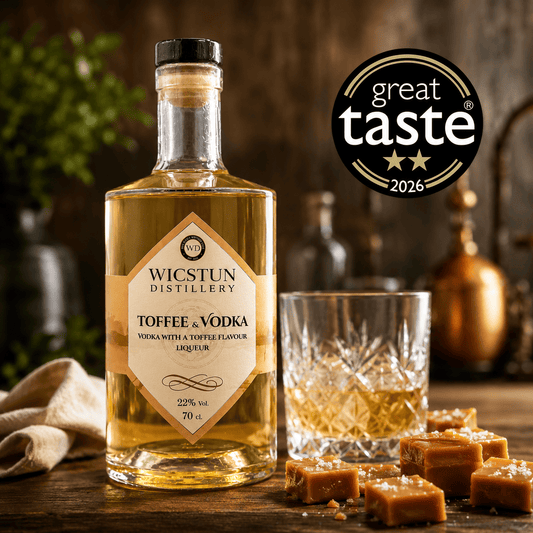
This is the part everyone looks forward to, and it does not disappoint. At Wicstun, the tasting covers the full range of spirits: the gin collection including the aromatic dry and the pink gin made with real berries, the rum range from Caribbean dark to honey rum, and the vodka collection including the toffee vodka with salted caramel that consistently gets the biggest reaction from visitors.
Each spirit is tasted with a brief explanation of what went into it and how it was made. The distiller will suggest the best way to serve each one, from the ideal tonic pairing for the gin to whether the rum is better neat or in a cocktail. There is no pressure to like everything, and honest reactions are encouraged. Some of the best tour moments come from someone trying a spirit they expected to dislike and being completely won over.
The tasting is also where you start to understand why craft spirits cost more than supermarket alternatives. When you have seen the ingredients, watched the process, and tasted the difference, the price on the bottle makes sense in a way it might not have before you walked in.
Buying and Taking Home
Most visitors leave with at least one bottle. Some leave with considerably more. The advantage of buying at the distillery is that you know exactly what you are getting. You have tasted it, you have met the person who made it, and you can ask for recommendations based on what you enjoyed during the tasting.
If you cannot decide on the day, everything is also available through the online shop with free delivery on orders over £50. Many visitors return to the website within a few weeks to reorder their favourite or to buy bottles as gifts for friends and family who need to try what they discovered.
Who Is It For
Distillery tours are not just for spirit enthusiasts. They work for couples looking for a date with a difference, small groups of friends wanting an activity that does not involve a screen, families celebrating a milestone, hen parties and stag dos, corporate team outings, and anyone who is simply curious about how the drinks they enjoy are actually made.
You do not need any prior knowledge of spirits. The tour is designed to be accessible to complete beginners while still being interesting to people who already know their way around a gin and tonic. The only requirement is an open mind and a willingness to try things you might not normally choose.
Practical Details
Wicstun Distillery is at Unit 1, Lambert Enterprise Park, York Road, Market Weighton, YO43 3RJ. That is roughly 30 minutes from York, 30 minutes from Hull, and 20 minutes from Beverley. There is parking on site.
Tours last approximately 90 minutes and include tastings of the full range. Booking in advance is recommended as tours sell out regularly, especially at weekends. Contact the team at sales@wicstun-distillery.co.uk or call 01430 411060 to check availability.
All products are vegan-friendly and made without artificial flavourings. Gift vouchers are available if you want to give the experience to someone else. And if you enjoyed the St Catherine's Hospice spirits during the tasting, 17.5% of every bottle sold goes directly to the charity.
A craft distillery visit is one of those experiences that stays with you longer than you expect. Not because it is dramatic or expensive, but because it connects you to something real. The next time you pour a measure of something handmade, you will think about the person who made it, the room where it happened, and the afternoon you spent learning why it tastes the way it does. That is worth more than another evening staring at a menu.