Table of Contents
- Why Proper Tasting Technique Matters for Premium Craft Spirits
- What You'll Need Before You Start Tasting
- Step 1: Observe the Colour and Clarity
- Step 2: How to Nose Craft Spirits Effectively
- Step 3: The Initial Taste and Palate Development
- Step 4: Adding Water and Exploring the Spirit
- Step 5: Evaluating the Finish and Aftertaste
- Pairing Craft Spirits with Food for Enhanced Appreciation
- Frequently Asked Questions
Last Updated: September 30, 2026
Why Proper Tasting Technique Matters for Premium Craft Spirits
Tasting premium craft spirits properly transforms a simple drink into an experience. Most people pour a glass and sip without thinking about what they're tasting. That's fine for everyday drinks. But with craft spirits, especially handcrafted gins, rums, and vodkas, you're paying for complexity that deserves attention.
At Wicstun Distillery, we've seen how the right technique unlocks flavours that casual drinkers miss entirely. A proper tasting reveals the botanical notes, the balance, and the craftsmanship behind each bottle. You'll notice details you'd never catch otherwise: the warmth of cardamom in a dry gin, the vanilla and oak in a dark rum, the smoothness that comes from small-batch production.

This guide walks you through how to taste premium craft spirits step by step. You'll learn what to look for, how to nose spirits effectively, and why adding water changes everything. By the end, you'll have the skills to appreciate what makes artisanal spirits worth the investment.
What You'll Need Before You Start Tasting
Before you begin, gather a few simple items. You don't need much, just the right tools make the experience better.
Essential tasting equipment:
- A tulip-shaped glass or Glencairn glass (narrow at the top to concentrate aromas)
- Bottled water at room temperature (to add to your spirit)
- A notebook to record your thoughts
- Proper lighting (natural daylight is ideal)
- A quiet space free from strong smells
The glass matters more than you might think. A tulip shape narrows at the top, which concentrates the aromas and directs them toward your nose. A standard tumbler spreads the spirit out, losing half the sensory experience. If you're serious about tasting premium craft spirits, invest in proper glassware.
Water is essential too. Adding water opens up flavours that alcohol can mask. Room temperature is better than cold, which numbs your palate.
Choosing the Best Glassware for Tasting Spirits
The right glass shapes the entire tasting experience. A tulip glass or Glencairn glass is standard for good reason: it concentrates aromas at the top and keeps the spirit at the right temperature in your hand.
Avoid wide-mouthed glasses, which let aromas escape. Avoid ice-filled tumblers, which numb your palate and dilute the spirit unevenly. The best glassware for tasting spirits has these features:
- Narrow opening to concentrate aromas
- Enough room to swirl without spilling
- Thick enough to hold without warming the spirit too much
- Clear glass so you can see colour and clarity
A quality glass costs little but makes a real difference. If you're tasting multiple spirits in one session, have several glasses on hand so you can compare without rinsing between tastes.
Step 1: Observe the Colour and Clarity
Start by looking. Pour about 30ml into your glass and hold it to the light.
What you're assessing:
- Colour: Does it have a golden hue, deep amber, or clear transparency? Colour tells you about age and production. A dark rum will be rich brown. A dry gin will be clear or very pale. Colour comes from barrel ageing or botanicals.
- Clarity: Is it bright and clear, or does it have cloudiness or sediment? Premium spirits should be clear. Cloudiness can indicate temperature shock or poor storage.
- Viscosity: Tilt the glass and watch how the spirit clings to the side. Thicker, slower drips suggest higher alcohol content and more body.
Take your time here. Look at how light passes through the spirit. Note whether it's uniform or if there are variations in colour. This first step teaches your eyes what quality looks like.

Step 2: How to Nose Craft Spirits Effectively
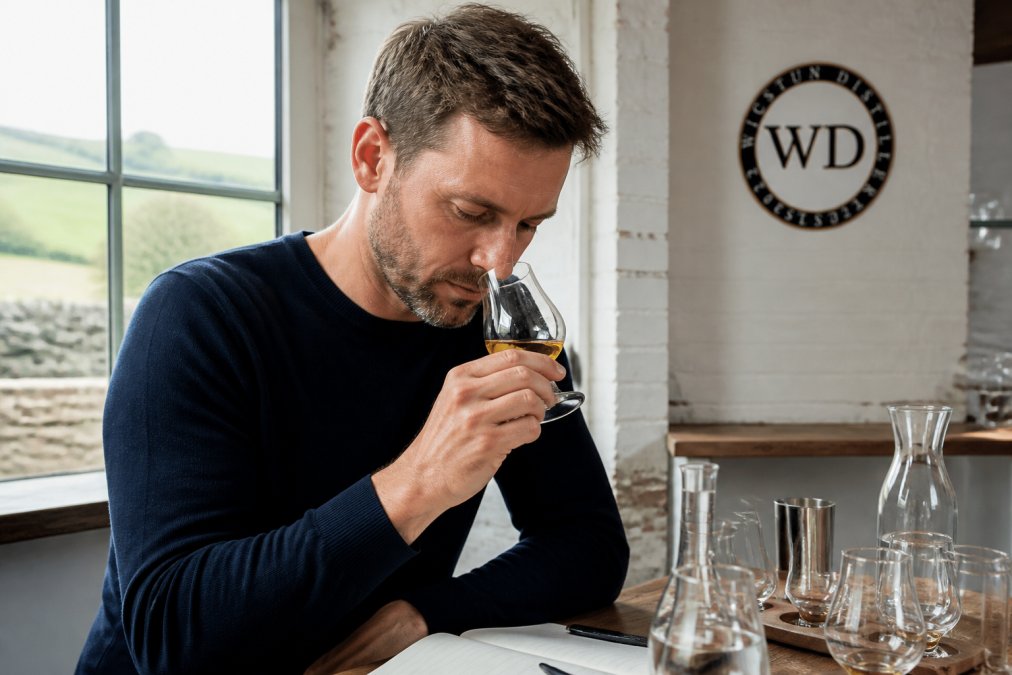
Nosing, smelling the spirit, is where most of the tasting happens. Your sense of smell is far more sensitive than your taste buds. How to nose craft spirits effectively requires a gentle approach.
Yorkshire Distillery Tour with Gin & →
Hold the glass at chest height and bring it toward your nose slowly. Don't plunge your nose into the glass. The alcohol vapours can be intense and will numb your nose if you inhale too hard. Instead:
- Bring the glass close and breathe gently through your nose
- Pause between sniffs to let your nose reset
- Try to identify individual aromas: citrus, spice, vanilla, floral notes
- After a few sniffs, take a short break and come back to it
On your first nosing, you'll catch the obvious aromas. On the second, subtler notes emerge. This is why nosing craft spirits takes time, your nose needs pauses to detect layered scents.
Common aromas in premium spirits:
- Botanical notes (juniper, cardamom, coriander in gin)
- Fruit (citrus, stone fruit, berries)
- Wood and spice (vanilla, oak, cinnamon)
- Floral (rose, lavender, hibiscus)
The best glassware for tasting spirits helps here too. A tulip shape concentrates aromas so you catch more without forcing your nose into the glass.
Step 3: The Initial Taste and Palate Development
Take a small sip, no more than a teaspoon. Let it sit on your tongue for a moment before swallowing.
What happens:
- Your palate registers the first impression: Is it smooth or harsh? Sweet or dry? Warm or cool?
- As you hold it in your mouth, flavours develop. The spirit coats your tongue and the back of your throat.
- When you swallow, notice how the warmth spreads through your chest.
Don't rush this. Premium craft spirits reward patience. A small sip tells you far more than a large gulp.
Pay attention to:
- Mouthfeel: Is it silky, oily, or thin? A well-made spirit feels balanced on your palate.
- Flavour layers: What tastes do you notice? Spice first, then sweetness? Citrus fading to oak?
- Warmth: How does the alcohol feel? Gentle or aggressive?
Your palate develops as you taste. Your first sip might taste simple. By your third or fourth small taste, you'll notice details you missed before. This is normal. Your mouth is learning.
Step 4: Adding Water and Exploring the Spirit
This step changes everything. Add just a few drops of water, start with a teaspoon, and nose again.
Water opens the spirit up. It dilutes the alcohol slightly, which lets your nose and palate detect aromas and flavours the neat spirit was masking. Many drinkers skip this step and miss half the experience.
After adding water:
- Nose again. You'll catch new aromas.
- Taste again. The flavour profile shifts.
- Add more water gradually if you like. There's no "right" amount, it's personal preference.
This is where you discover what makes premium craft spirits worth tasting. A well-made gin or rum reveals complexity as you add water. A poorly made spirit doesn't improve much. The water acts as a revealer.
Some spirits shine neat. Others open up with just a drop of water. Experiment. This is the fun part of tasting premium craft spirits.
Yorkshire Distillery Tour with Gin & →
Step 5: Evaluating the Finish and Aftertaste
The finish is what lingers after you swallow. It's often overlooked, but it's crucial to understanding a spirit's quality.
Swallow your sip and notice:
- How long does the flavour linger? A few seconds or several minutes?
- Does the warmth fade smoothly or harshly?
- What's the final flavour? Sweet, dry, spicy, smooth?
A quality finish is long and pleasant. It should feel balanced, not overly hot, not thin. The flavours should fade gradually, not disappear abruptly.
In premium spirits, the finish often reveals craftsmanship. A well-balanced spirit leaves a warm, pleasant sensation. A poorly made one might burn or taste hollow.
Take notes on the finish. It's the last impression your palate receives, and it shapes how you remember the spirit.
Pairing Craft Spirits with Food for Enhanced Appreciation
Pairing craft spirits with food deepens your appreciation. The right food complements the spirit's flavours and creates new taste experiences.
Gin pairings:
- Citrus-forward gins pair beautifully with seafood and light starters
- Botanical, earthy gins work well with cheese and cured meats
- Floral gins complement desserts and chocolate
Rum pairings:
- Dark, rich rums pair with chocolate, caramel, and spiced foods
- Lighter rums work with tropical fruits and vanilla-based desserts
- Aged rums suit savoury dishes with warm spices
Vodka pairings:
- Smooth, clean vodkas pair with delicate foods that might be overpowered by other spirits
- Flavoured vodkas work with complementary foods
The key is balance. A bold spirit needs food with enough character to stand up to it. A delicate spirit pairs with subtle flavours.
Frequently Asked Questions
What is the correct order for tasting premium craft spirits?
Begin by observing the spirit's colour and clarity in good light. Next, nose the spirit by holding the glass below your nose and breathing gently to identify aromas. Then take a small sip, letting it coat your palate before swallowing. Add a few drops of water to open up new flavour notes, and finally evaluate the finish as the flavours fade. This sequence allows your senses to build on each other, revealing the full complexity of the spirit.
Should you add water when tasting premium craft spirits?
Yes, adding water is essential when tasting premium craft spirits. A few drops of water dilutes the alcohol slightly, which opens up new aromas and flavour compounds that alcohol can mask. This is why nosing neat spirit followed by nosing after adding water reveals such different characteristics. Many distillers recommend this technique, and you'll often notice entirely new dimensions emerge once water is introduced to the spirit.
How does glassware affect the taste of premium craft spirits?
Glassware significantly influences your tasting experience. Tulip-shaped or copita glasses concentrate aromas toward your nose, enhancing the nosing experience. Wider bowls allow you to observe colour better but disperse aromas more. The shape also affects how the spirit reaches different parts of your palate. Proper glassware isn't just about aesthetics—it's a functional tool that helps you experience the full complexity the distiller intended in their premium craft spirit.
What should you look for in the finish of a premium craft spirit?
The finish is the aftertaste that lingers after you swallow. Quality premium craft spirits have a long, evolving finish where flavours continue to develop and change. Notice whether the finish is warming, cooling, spicy, sweet, or dry. Consider how long the flavours persist—premium spirits typically have finishes lasting 30 seconds to several minutes. The finish reveals the spirit's complexity and the quality of its ingredients and production methods.