Table of Contents
- Why Proper Storage Matters for Your Craft Gin
- What You'll Need Before You Start
- Step 1: Find the Best Temperature to Store Gin
- Step 2: Understand Gin Shelf Life After Opening
- Step 3: How to Display Gin Bottles Without Damaging Them
- Step 4: Storing Opened vs Unopened Bottles
- Common Mistakes to Avoid When You Store Craft Gin
- Conclusion
- Frequently Asked Questions
Last Updated: September 20, 2026
Why Proper Storage Matters for Your Craft Gin
Knowing how to store craft gin properly is the difference between a bottle that tastes fresh in two years and one that tastes flat in two months. At Wicstun Distillery, we hand-distil every small batch in Market Weighton, and we've learned that good storage protects the delicate balance of botanicals that makes artisanal gin worth buying.
Craft gin is an investment. You're paying for careful distillation, not mass production. Poor storage undoes that care.
Light, heat, and air are the three enemies. Each one slowly changes how your gin smells and tastes. The good news: protecting your bottle takes very little effort.
Below, we'll walk through exactly how to store craft gin, step by step. We'll cover temperature, shelf life, display ideas, and the mistakes that ruin bottles.
What You'll Need Before You Start
You don't need special equipment to store gin well. A few simple items make the job easier:
- A cool, dark cupboard or shelf
- A thermometer to check room temperature
- Airtight stoppers or the original cap
- A pen and labels for opened bottles
- A soft cloth for dusting bottles
- A box or bag for long-term storage
That's it. No fridges required, no fancy gadgets. Most homes already have everything on this list.
One note: keep your gin in its original bottle. Glass is inert and won't react with the spirit. Decanters look lovely, but they let in more air and light.
Step 1: Find the Best Temperature to Store Gin
The best temperature to store gin sits between 15°C and 20°C. A steady, cool room beats a warm kitchen every time. Big swings in temperature do more harm than a slightly warm day.
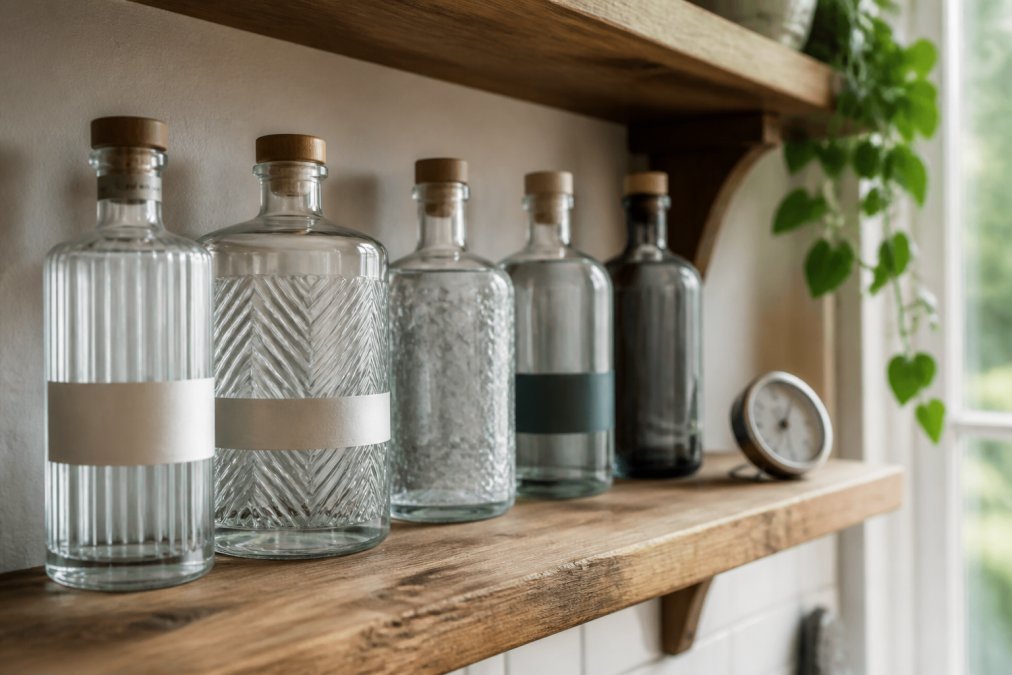
Where should you avoid? The top of the fridge, above the oven, and next to a radiator. These spots run warm and shift often.
If you have a cool pantry or a lower cupboard, that's ideal. Basements work well too, as long as they stay dry.
- Aim for 15°C to 20°C
- Keep the temperature steady
- Avoid hot rooms and direct sun
- Never store gin in a freezer
Freezing won't damage the spirit, but it dulls the flavour. You want your gin ready to pour, not thawing on the side.
Step 2: Understand Gin Shelf Life After Opening
Gin shelf life after opening is longer than most people think, but it isn't endless. An opened bottle stays at its best for around one to two years. After that, the botanicals fade and the taste turns dull.
Unopened bottles last far longer. A sealed bottle kept cool and dark can hold its character for many years. Some collectors keep bottles for a decade or more.
Why does opening change things? Oxygen. Every time you pour a drink, fresh air enters the bottle. Over months, that air slowly softens the juniper and citrus notes.
Signs your gin is past its best:
- The aroma feels flat or faint
- The taste seems thin or watery
- The colour has shifted
- It smells slightly of cardboard
The gin won't make you ill. It simply won't taste as good. For a premium bottle, that's reason enough to drink it sooner.
Step 3: How to Display Gin Bottles Without Damaging Them
Displaying gin bottles is fine, as long as you plan for light. UV rays break down the compounds that give gin its flavour. A pretty shelf in direct sun is the worst place for any bottle.
Here's how to display gin bottles safely:
- Choose a shelf away from windows
- Use a cabinet with solid doors if you can
- Keep bottles upright, never on their side
- Rotate bottles so none sit in one spot too long
- Dust with a dry cloth, not a wet one
Upright storage matters because the high alcohol content can slowly eat at a cork. A sideways bottle lets liquid touch the stopper for months. Upright keeps the cork dry and the seal strong.
If you love the look of a bar cart, keep it out of direct light. A shaded corner works well.
Step 4: Storing Opened vs Unopened Bottles
Opened and unopened bottles need slightly different care. The table below sums up the key differences.
| Factor | Opened Bottle | Unopened Bottle |
|---|---|---|
| Best lifespan | 1-2 years | Many years |
| Light exposure | Keep dark | Keep dark |
| Temperature | 15-20°C | 15-20°C |
| Position | Upright | Upright |
| Main risk | Oxygen | Light and heat |
For opened bottles, the priority is limiting air. Seal the cap tightly after every pour. If the bottle is nearly empty, finish it soon rather than saving it.
For unopened bottles, the priority is light and heat. Keep them boxed or in a dark cupboard if you plan to save them.
A simple labelling habit helps. Write the opening date on the bottle. Then you'll always know how long it's been open.
Common Mistakes to Avoid When You Store Craft Gin
Most storage problems come from a handful of easy-to-fix mistakes. Here are the ones we see most often.
- Storing bottles in the fridge door, where temperatures swing
- Leaving gin on a sunny windowsill for the look of it
- Laying bottles on their side and soaking the cork
- Keeping gin near the oven or a radiator
- Forgetting to reseal the cap tightly
- Saving a nearly empty bottle for a special occasion
- Using a decanter for long-term storage
The decanter mistake catches people out. Decanters look elegant, but most don't seal well. They let in air and light. Use one only if you plan to drink the gin within a few weeks.
Another common slip: buying a beautiful bottle and storing it in the kitchen. Kitchens run warm and humid. A cool hallway cupboard is a far better home.
If you're coming from a wine background, expect gin to behave differently. Wine ages and changes in the bottle (Why do we age wine?). Gin is already distilled and blended. It doesn't improve with age. You're protecting it, not developing it.
Conclusion
Good storage protects the craft and care that went into your bottle. Light, heat, and air are the three things to guard against, and a cool, dark cupboard solves most of it.
At Wicstun Distillery, every bottle is hand-distilled and bottled in small batches, with vegan-friendly spirits inspired by the Yorkshire Wolds. Our award-winning range deserves the same care you'd give any premium purchase. Keep your bottles upright, cool, and out of the sun, and every pour will taste as it should.
Ready to stock your shelf? Explore our range of gins, rums, vodkas, and liqueurs, all crafted for a balanced, delicious drink. Get started with Wicstun Distillery and taste the difference proper storage protects.
Frequently Asked Questions
Does craft gin go off after opening?
Craft gin does not spoil in the way food does, but its flavour fades over time once opened. The botanicals that give gin its character begin to lose potency as oxygen enters the bottle. Most opened gins stay at their best for six to twelve months, though higher-strength bottles can hold their flavour longer. If your gin tastes flat or muted rather than fresh, it is past its best. Store it sealed, upright and away from heat to slow this decline.
Should I store my gin in the fridge or freezer?
A fridge is fine for everyday storage if you have space, but a freezer is not recommended. Gin has a high alcohol content so it will not freeze solid, but extreme cold can dull the botanical notes and make the spirit taste thinner. The best temperature to store gin is a cool, stable spot between 15°C and 20°C, away from direct sunlight and heat sources such as radiators or ovens. A cupboard or shelf in a cool room works well.
Is it better to store gin upright or on its side?
Always store gin upright. Unlike wine, gin should never lie on its side. High-strength alcohol can degrade the cork or seal over time, and if the liquid sits against the closure it may pick up unwanted flavours. Keeping the bottle upright also reduces the surface area of gin exposed to air inside the bottle, which helps preserve the botanicals. This applies to both opened and unopened bottles.
How can I tell if my gin has spoiled?
Gin rarely becomes unsafe to drink, but it can lose quality. Signs to watch for include a dull or flat aroma, a muted taste where the botanicals once stood out, or a slight colour change in flavoured gins. If the bottle has been stored near heat or in direct sunlight, these changes happen faster. Trust your senses: if it smells and tastes noticeably different from when you opened it, the gin has passed its best and is better used in cooking or discarded.